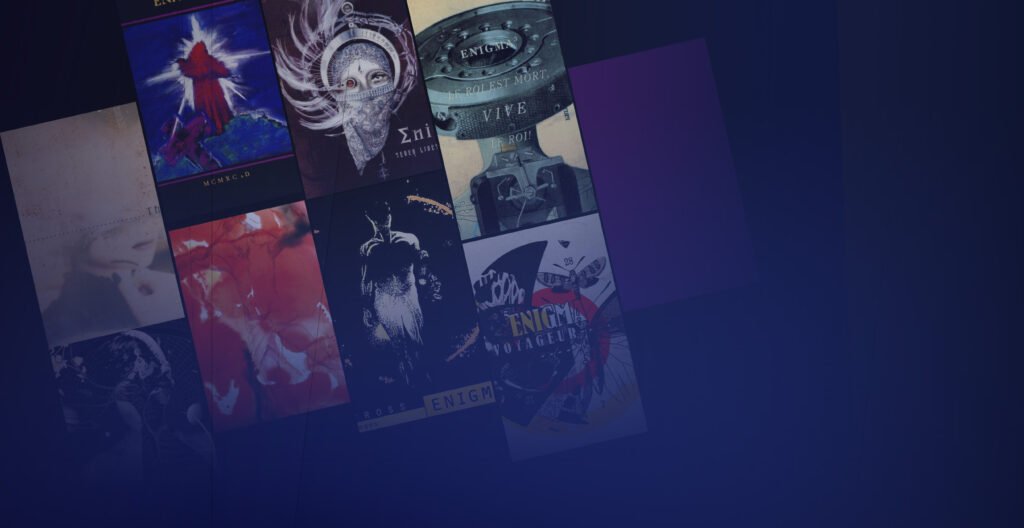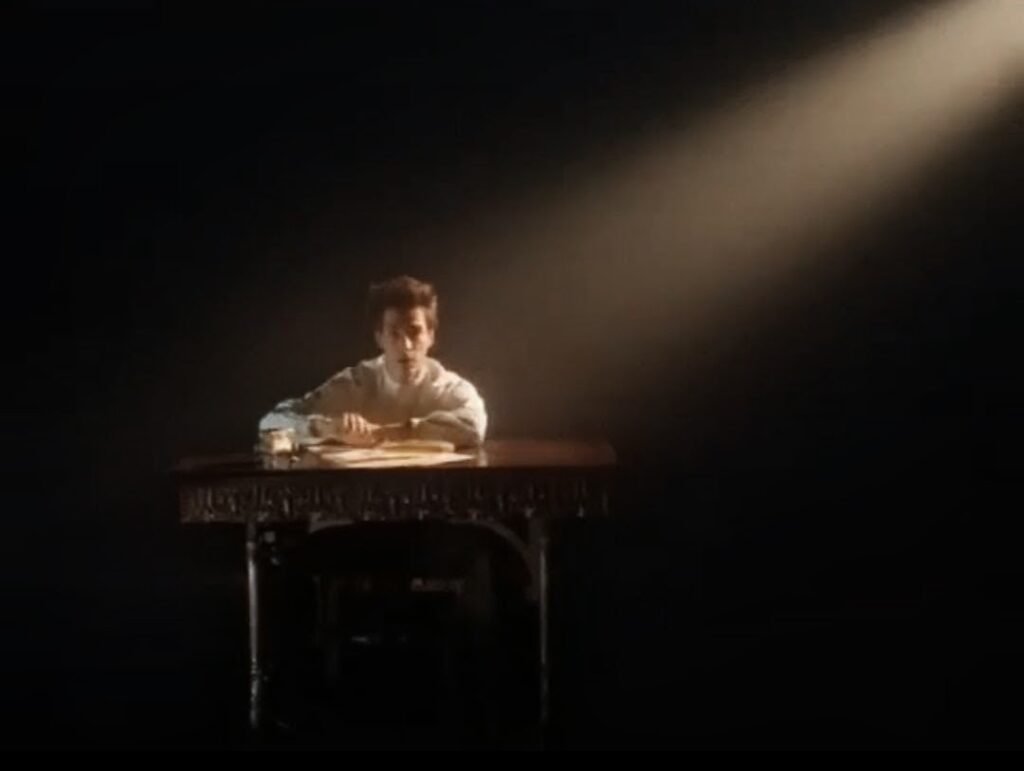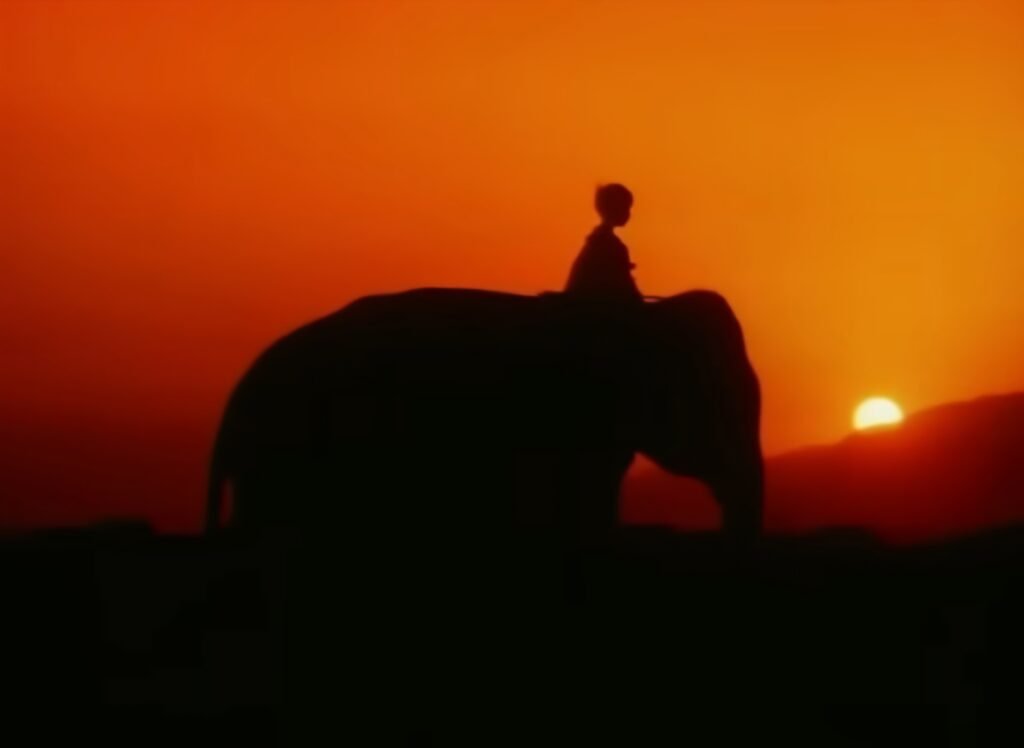
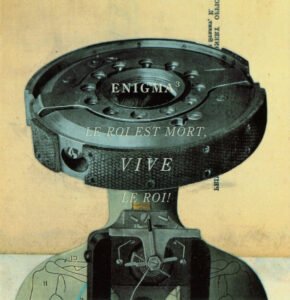
As the old man of ‘Return to Innocence’ dies instantly after holding a quince fruit, a rebirth and desire to start anew begins. This is also how the third successive album of Enigma starts: “The King is dead, long live the King!”, a phrase used after the death of King Charles VI in 1422 whose throne was immediately succeeded by his son Charles VII.
The mention of the king in the album does not necessarily have the meaning of the ruler that died, but rather used artistically to symbolize the death of an era and the start of a new one. The kings in the past were the most important figures, because to the people, they were God’s chosen rulers.
The death of the king would mean the immediate succession of the heir to the throne; it shows how a new era comes immediately after the death of an old era, which is a great analogy to the concept of identity death and rebirth. If I am not mistaken, Michael Cretu did mention somewhere a small inspiration from William Shakespeare in the third album.
The idea is that the dying of the old self and the rise of the new, had to be just as brutal and inevitable like the death of Shakespeare’s kings, who were brutally murdered, poisoned or assassinated for being tyrannical. The analogy to the human would mean that one also had to kill a bad part of themself in order to wake up as someone completely new. And that’s still a part of the journey to purification, it’s called ‘ego death’.
This album is described as ‘the child’ of the first and the second album. What it actually means we will learn later.
Le roi est mort, vive le roi!
The opening of the album starts immediately with this particular phrase and where the lyrics pay a tribute to the 1968 film of Stanley Kubrick’s ‘2001: Space Odyssey’, a movie which perfectly portrays the evolution of the consciousness from the appearance of the black monolith for its use by the ‘apes’ up until the period where the main character, Dave Bowman dies and is reborn as a ‘Star Child’.
Although Kubrick did not disclose the exact meaning of the film, it’s already hinted with the soundtrack that is borrowed by German composer Richard Strauss, also inspired by Friedrich Nietzsche’s book “Thus spoke Zarathustra”. One can say that Kubrick was inspired by Nietzsche’s concept of human consciousness, but you can also say that it is perfectly linked with the journey of man in “Enigma”.
Nietzsche believed that for a man to achieve the ‘Superhuman’ stage, he had to go through three stages: A camel, lion and a child. A camel shows the symbolism of how a human being carries too much weight on their shoulders, things that don’t allow him to live in freedom and that trap him. The transformation into a lion shows the brutal rebellion and the rejection of old values that once used to be a burden and couldn’t allow a man to advance forward.
The final stage of the transformation is the child, who naturally symbolizes the state of innocence and the new beginning, after a very long journey of burdens and destruction of tradition. As you can see, the concept of ‘death and rebirth’ is constantly hinted in Enigma in very different ways.
In the lyrics of this particular track itself, it shows how the concept of ‘change’ is really present not just in humanity but even in the world and the universe. We’re always in the stage of evolving, however, humanity has been granted free will, and it is their choice to shed their old skin.
But the track ends brutally, with the exact phrase. The old me has died, time for someone new to emerge.
Morphing Thru Time
A clarification for Nietzsche’s ideals had to be made in order to understand the concept of human rebirth through different lens and in all periods of humanity. Here’s perfectly made clear how a man, who’s consciously made the choice to evolve, also has doubts on whether he’s made the right choice to do so or not. These are normal doubts because the death of the old self is not an easy process, as it involves letting go of things which to you were very important in your life. Things take time.
Indeed, “nobody knows the answer while we’re morphing through time”, but you’ll only realize it in the end why this transformation was really needed. Because at the end of the journey, you will only see the light that will shine in your eyes that will give you the enlightenment and why everything had to happen.
It all happens in the Mother Earth, this safe place where such beautiful and rich ecosystems reside, these places where your soul awakens and falls in love. If you see a turtledove flying above, they’ll tell you to whom you belong.
Third of its Kind
This interpretation was one of the most complex ones to make, solely because of its very short lines which seem easy to understand on the surface. But deeper it’s much more complicated. It’s not clear if this is accurate, but we’ll give it a go.
The lyrics is as follows: The first is the father, the second is the mother, the third is the child.
This doesn’t mean that we’re talking about a literal family that brings to life a child through the father and the mother. These things are very symbolic.
Think that third album is the child of the first and the second. These two albums could’ve also been created in such an order where first came the masculine, then the feminine, then the product of these two. Let’s remember and think for a second that the first album that we’ve analyzed is way too much of a scolding nature, typical for a father. While the second album has softer undertones as it contains a lot of motherly love. In essence, it’s just masculine vs feminine clashing.
However, remember what Nietzsche said that the child is the final stage of human consciousness. The third of its kind means the third product that is about THIS theme, this journey, this love.
The product of these two energies or these two people is nothing more but love, their union brings love. This love is pure and innocent. But this love is so risky and has been put a lot of weight on it. Even in real life, two parents who are in constant conflict only puts too much weight on the child who’s forced to grow earlier.
This product, this child, this love is pure and innocent in theory. But it won’t survive if both people are negative. It is also why in the second album, the painful decision comes. It’s hard to leave love behind, but it’s for the better. For the sake of growth and purification. When a love is put too much weight on, both are to blame.
To learn to love and to live this pure and innocent love both as purified, as children.
Beyond the Invisible
One of the most beautiful tracks of Enigma contains themes of Hermann Hesse’s concept of rebirth who was heavily influenced by the work of psychologist Carl Jung. Hesse believed that humans are always longing for a counterpart that completes their soul in one way or another.
Contrary to Nietzsche who believed that the human himself had to bring destruction in order to reach that divine being of innocence, Jung’s idea was much more ‘soft’: the human had a hidden side that had to be awaken. This was either brought by self-discovery, or the arrival of an opposite and complementary energy. Much like the concept of ‘Yin and Yang’ where the small dots are the hidden parts of yourself that have to be developed. But even though their ideas clashed, the core remained the same: The man has to go through transformation.
“Close your eyes. […] I’m in you and you’re in me” evidently hints Hesse’s book ‘Demian’ where the said character Max Demian tells his kindred spirit, Emil Sinclair who is lying on the bed injured that he has to listen to the voice inside himself. Once again, the voice within always ties back to Virgil with Dante, because it’s Virgil who guides Dante during the journey.
Here, Demian tells Sinclair to close his eyes, because he is inside him and he shouldn’t be scared. The moment culminates where Demian kisses Sinclair on the lips, and the latter sees a reflection of Demian in his own mirror. Hesse also wrote Siddartha, Narcissus and Goldmund and Beneath the Wheel, and it is unknown what was his intention to always include two male characters, which to him definitely symbolized two kindred spirits who perfectly complemented each other despite their opposite energies. The absence of one of them only brought destruction.
Going back to the track itself, it’s a hint of an invisible barrier that uselessly stands between two people who cannot recognize how similar they’re to each other. Or even recognize themselves in the mirror. It is useless to create a barrier while two people who stare at each other can immediately feel what they are to each other and it cannot be denied. For whatever reason, it’s hinted in the lyrics that the person or the people are constrained and it does not allow them to recognize the truth.
I could even say that this might already hint to Antoine de Saint-Exupery and the Little Prince (which we’ll see as an inspiration for ‘A Posteriori’ later), where the wise fox tells the prince that essential things are invisible to the eye, because the most important things in life can only be felt, not seen.
This invisible barrier is completely useless. Once the narrator arrives and looks the counterpart in the eye, nothing can be denied or hidden. It’s for both of them to see how they’re the mirrors of each other, no matter how different they are.
The video-clip however, shows a young girl who escapes her house, her dad and arrives in a very lively forest (which symbolizes the Greek Goddess Gaia or the Mother Earth), the girl hides in the forest and sees a couple who dance intimately in the ice. After the arrival of the three machine-men, she joins them in the end and the couple disappears. Be mindful that it could either symbolize the rejection of love for something cold, or symbolize the choice of someone who had to make a hard decision based on logic and not on emotion (remember the second album…)
Or it could be both… Well, it turns out that this paradise was thus “desolated”… Such paradise is the love…
Why!…
It’s regarded as one of the most mysterious songs in Enigma (by the fans themselves too) for the intimate and sorrowful message that is conveyed here. Because Michael sings it himself… for his only friend, that one can assume is the same one from the Rivers of Belief and Return to Innocence. And it does seem as if the friend is being told to go through this particular journey themself.
The song is full of regret and sadness, a constant question that has no answer because the friend is gone and refuses to answer. He has turned cold… But the narrator keeps asking and keeps returning, because regret and grief are hard to overcome. There’s a little faith that maybe that friend will finally see the light shining in their eyes… “Many years and stupid fights, till we accept to see how it was and it will always be…”
Well, why does it remind us so much of the ‘fight’ from ‘I Love You… I’ll Kill You’… ?
Shadows in Silence
Shadows of the past that still haunt us even in the most quiet moments. Shadows that don’t allow the person to move on. For a person who recharges himself in solitude, away from daily human connection, it is not an easy experience to be haunted by the ghosts of the past. You want to use solitude to charge your social battery, but it can’t happen when those ghosts still haunt you. It will either bring you bad or good memories. Michael must have been very close with his mother, for which the song is also dedicated to. (She passed away just a few years later).
In the most vulnerable moments, the mask of the charm slipped and it allowed pure pain for the mother to see what her son was going through.
The Child In Us
Another beautiful track that talks about the recognition of souls. A sincere and raw romantic confession that explains the importance of a kindred spirit, that makes your heart flutter and your life safer. We know that the ‘child’ is the final stage of human innocence which is achieved through a difficult journey. It’s what shall guide them together to the light so they can be together.
But what’s also striking is that the narrator evidently points out how important this person is in their life, because they need the person with all their flaws and virtues. They also recognize that the light in their life is indeed this person. It’s similar to that saying, when your eyes sparkle or shine when you see the one you love the most.
For a lone wolf, a kindred spirit lights up every fiber of their being. They know who is the one who completes them and remain faithful and devoted to them until the end of their days. They know they will never ever find anyone like them, just as childlike as them.
But as beautiful as love is, it could also be just as difficult, it bears too much weight, sometimes hard to hold… An empire on the shoulder
T.N.T. For The Brain
And here it continues… Right off the bat it starts explosive (pun intended) as a mutual interaction between two people who are engaging very intimately. But the question remains: What kind of love is this? Is this love that destroys your reasoning and it makes you lose control? Or is this love that lights up your being and makes you feel alive?
Remember “I Love You… I’ll Kill You”, it follows this line of reasoning. They know how dangerous it is, how confusing it is… it explodes their brain with all its confusion, pain, danger and passion, but it makes them feel alive.
The narrator knows this is real love, even if circumstances are painful and separation was needed for personal growth. But it seems like their kindred spirit doesn’t think the same. They are also just as confused. They’re also going through pain.
A hint for two kindred spirits can also be seen in the video-clip for this track: Two women who look identical. It’s a cool metaphor. Nothing to do with lesbianism so far (Although we will explore these themes later on). The cover-single is also interesting, the duality of man between emotions and logic. The confusion that comes when you’re at crossroads. The age of coldness when you reject pure love for a monotonous way of life. But two things that are so needed in this world to bring life and the world into balance…
Almost Full Moon
Very easy. The cycle of the moon that lights up in the darkest of nights has not yet been completed. The journey of the moon to full illumination has not been reached yet. Also a cool figure of speech to say that the man is on his way to enlightenment…
The Roundabout
A roundabout is a spinning disk that can be found in children’s amusement parks, consisting of a moving disk that spins around and bars that are used to spin and pull the disk with hands. It’s a ‘smaller’ version of a carousel. And it’s a very clever way to disguise the real meaning of it, which is exactly the “Wheel of Fortune”, but as a child’s play.
The foundation of your life starts in childhood and the way you’ve been raised could also dictate the way you’ll behave in adulthood. It means that life is such a child’s play, a child doesn’t know how to dictate life by himself. It will be brought to him. Because fortune doesn’t have eyes and it strikes down even the stronger man (You will understand the reference later…)
And this is exactly how life is, an everchanging cycle with so many important lessons for growth. But even as life changes, love will never disappear, because even in the dark, when the two arrive, it lights up even the night. It’s once again the same as that saying: “You’re the light of my eyes”. It makes one see the truth in pitch-black to recognize what a force of nature it is.
In the end of the song, the importance of the voice of reason and the dying of the old self are evidently highlighted. Everything makes perfect sense. Naturally! It means that even after a painful separation, you need not worry because love will never die down, but nevertheless, it’s very necessary to change yourself.. To shed your old skin and let the new one emerge. Purify yourself from all the vices.
So they could both love properly, not to much and not too little… But the perfect amount. The teachings of Dante.
Prism of Life
To understand and live the life, you have to see it with all its colors and in all perspectives. All you need is light, because without light, you can’t see any of the colors and you won’t understand life.
The light won’t come if you’re scared to repeat the same mistakes and if you’re haunted by the ghosts of the past. Instead of letting the past teach you lessons, you allow it to haunt and lock you in a cage. You’d never be able to move on. This is what the first verse (by Sandra) conveys: A dilemma and a fear for the future which you’ve always dreamed to be better, that could become another destructive and painful cycle. You don’t want it, and you’re scared.
But on the opposite of the spectrum, (by Michael) there’s another voice that ultimately challenges this fear: Learn to live and don’t be scared. Because if you simply follow the voice within, the light will come much quicker than you think. The lost illusions are the dreams and the plans of the past that couldn’t be fulfilled then. But they could be fulfilled now if you learn to live.
It’s then that this light will make you see life with all its colors and how beautiful it is. That’s why the title choice is clever: You need a light to see all its colors reflected from the prism.
These unfulfilled dreams and plans are motives for someone to keep moving and going through that journey. Because he wishes to fulfill them in the future in a place where the Sun shines for eternity, or also known as ‘Midnight Sun’. It’s this light that they wish to follow and reach.
Odyssey of the Mind
Odyssey was among the wisest kings in Greek mythology, and his name in itself means “a long, difficult journey”. It’s truly a journey of the mind (like Dante who imagined his journey in his Divine Comedy), because in this journey you only learn to become wiser by yourself. You gain wisdom by yourself and there’s nobody to help you teach.
Conclusion
This was one of the most complicated albums to analyze so far and considering the length of the analysis. We didn’t have much space also for the imageries in the album, but there’ll undoubtedly be a separate analysis for it.
The third album is understanding the consequences of your decisions and understand the aftermath of the decision.
Hence, it’s the child of the first and the second album. It’s a product, a love that was once too difficult to maintain and bear.
It reminds you that real and pure love involves two pure people who have learned to grow, who have gained wisdom. It takes two to tango.
It means that it’s time to let go of old habits and to embrace something better. To let go of your old and destructive self, and embrace the inevitable rebirth of soul.
To learn to love and live.
Yet again, we face more questions…
Has “Enigma” been all the time a love confession of someone who was too in love and devoted all the way to the end?
Has “Enigma” been all the time the pleas of someone who wanted to save this love?
Has “Enigma” been all the time the desperate cries of someone who lies to himself he can cope with loneliness?
We will see how the journey develops.