
How did an entire album that clearly references ‘Divina Comedia’ of Italian poet Dante Alighieri get the labels of being entirely dedicated to Marquis de Sade? It’s not a mystery, considering how much it was marketed due to the wordplay of ‘Sadeness’ and the sexual themes that caused too much scandal in the Catholic world.
From an interview with BRAVO magazine in 1991, Michael Cretu had revealed that the idea to include Marquis de Sade as a figure in the project came after hearing his name in a French talk show with guests who were discussing about him. This sparked an idea about the conflicts of religious world with sexuality. And indeed what better way to create a scandal than to mix religion and sexuality? It’s something that people are often ashamed to talk about in public.
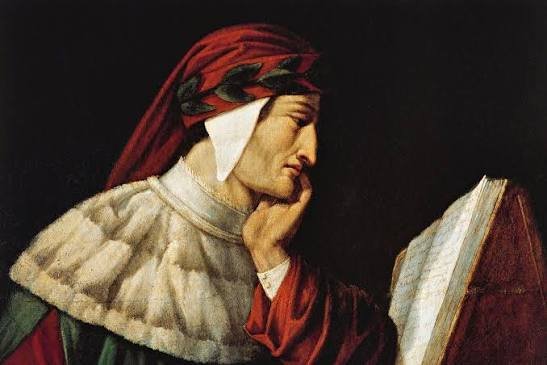
But just because the song ‘Sadeness’ or ‘Mea Culpa’ contain themes of religion and sexuality does not mean that it’s elevating or promoting sadomasochism or ‘Satanic’ values. Nor is it about the figure de Sade himself.
In fact, so many misconceptions were made as far as the topic of Marquis de Sade is concerned. You can see and read everywhere about him and plenty of interpretations on how the song is about him. But the wordplay is simply a clever way to say how self-destruction will lead to sadness. Because if you’re willing to destroy yourself and fall deep into a hole you yourself dug, you will realize the weight of your decisions.
In addition, the entire album is a whole different re-telling of Dante’s literary masterpiece and the clues have been made so blatantly in the song-titles, video-clips and the lyrics. Anyone who’s read the piece would notice it, but it’s been 36 years, it’s doubtful if anyone noticed.
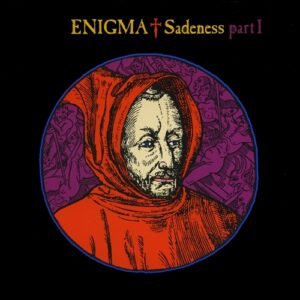
Sadeness
This one that marked the success of this project had for display one of the most obvious depictions of Dante’s masterpiece. The video-clip begins with a very young poet, with a large forehead and elevated strands of hair, wearing a white shirt, who writes with his quill in the dark and begins to faint, thus falling asleep. He transforms into a monk and wanders in ruins, encounters a beautiful woman who seduces him, opens the gates and then is succumbed to ‘nothingness’. In the end, he wakes up from the nightmare and looks up at the light for enlightenment. End.
This is exactly how Dante experiences his journey in the nine circles of hell. He fantasizes his journey and is all the time accompanied by his spiritual guide, or the voice of reason, Virgil. Even in the video-clip, the young boy wandering is supposed to symbolize a figure of Dante with his red costume who wanders in the ruins. It’s also made very cleverly the distinction of how the masterpiece was written, in both narrations. Dante the poet (the young man with the white shirt) and Dante the pilgrim (the young man as a monk).
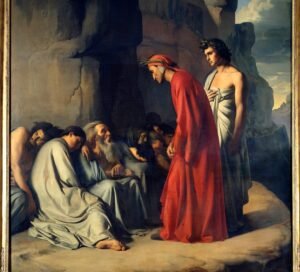
Although there’s no Virgil who can guide the young man, the implication is made in the fact that within humans there always exists a hidden self that has to be awakened. This young man in the video-clip does not represent Dante in flesh and blood, but it’s an artistic addition to place the young man in such a position where he has to realize the weight of his mistakes which will lead him in self-destruction. The woman in the music video does not signify only sexual seduction, but also seduction to general pleasures. In general, it simply means that something like that will only make you lose control over yourself.
In fact, even in the lyrics it’s told clearly how vices are much more destructive than the sin. “Sade, are you looking for virtue in vices? Are you the devil or divine?” To call someone ‘Sade’ could mean the deliberate degradation of someone who has chosen the path of self-destruction.
But de Sade wasn’t only a controversial figure when it came to taboo topics of sexuality, because for someone to call another with the epithet of de Sade also had to know a different side of him pretty well. De Sade was also a very prominent writer who wrote scandalous books where he also vastly exposed how twisted the world actually is.
It’s almost pretty much similar to Nabokov’s ‘Lolita’, which was clearly done to condemn pedophilia and it was still written in such a way that you would think a pedophile wrote it.
In the words of Oscar Wilde: “The books that the world calls immoral are books that show the world its own shame”
De Sade in his 20s had already gone reportedly crazy, he forced men and women all the same to have sex with him and had very sadistic tendencies, to which sadism earned its name from him, much like the practice of BDSM too. He was later imprisoned and died also in prison. So, ‘Sade’ is not necessarily a dedication to this particular figure, but a negative adjective to a person who’s gone through a similar path: Egoism, excess, pleasure, and someone who had a unique, twisted mind to describe about an event or something concrete.
Back to the analysis, the whole idea of ‘vices and sins’ show you that sins can be forgiven, you simply have to repent to God, but vices are the ones who bring the man to destruction of himself. This is something that no God can fix, you have to fix that yourself. They are simply ‘average habits’.
Even though humans are not perfect since the first sin was committed, for the narrator, however, the concept of this particular ideal man is to be divine. So, the spoken words are simply a scolding. He isn’t scolding humanity, he is scolding the young man or even himself.
It’s perhaps a different way of talking about the death of old identity and the rebirth of someone new. In the period Dante wrote the masterpiece, it has been reported historically that he was in a very bad period of his personal life and seemed lost in life. To find true happiness and enlightenment, he wrote the masterpiece in dedication to Beatrice, his greatest love. In our case, Beatrice is the embodiment of paradise, what you’ll reach after reaching the enlightenment.
The idea of Divine Comedy was not to stop loving. You need to love humanity, God and yourself, and this will make you love in the right way. The sloth loves too little, the lustful or greedy person loves too much. The young man in the video will have to realize what awaits him in the Gates of Hell. The devil is in yourself.
Mea Culpa
In Latin it means “My fault”, and this has been interpreted as a sexual song between two religious people who can’t be with each other. I cannot say if it’s true or false, but considering every song tells a story, this seems more like a song that is written in the perspective of the one who’s fallen in destruction. The words spoken by Sandra, don’t necessarily come from the woman. It’s more ambiguous than that.
Considering that the sinners have to repent to God, this is already done after the voice of reason has finally awakened in them. The voice of reason finally recognizes their fault, the fact that they’ve fallen deep into a hole, hence, ‘Mea Culpa’.
Here, the sinner wakes up, but as it seems, they are still clouded by lust and seem desperate. This could be a way of telling how mistakes lead to desperation. It’s a way of telling how you can easily lose your pride and to lose your pride it means to lose that little backbone it has left. It’s still something close to scolding but in a more degrading form. Something that takes form in a more concrete way: Do you want to see yourself like this? The psychological manipulation seems necessary.
This could well show someone who’s realized their mistake and has come back, but still clouded by lust and having lost their pride.
Principles of Lust
How easy can it get? The song does not tell you to keep having sex for the sake of angering the church, the Vatican and the Pope. It scolds you, or whoever that is.
It means that it is easy to get caught in worldly pleasures. It’s easy to succumb to these things.
And if you’ve stubbornly and already chosen this path, then do it. Keep on doing it until you realize what a fool you were. Until you realize that you will never find love that way, nor is it the right way to love someone.
In addition, the choice to include William Blake’s quote in the album (which we’ll also see it included in the fourth album too) “The road to excess leads to the palace of wisdom” fits perfectly with the themes of the album. Because the more mistakes you make, the more you learn. The more you succumb to selfish pleasures and forget yourself, the harsher the lessons will be. It is made clear, however, that one WILL learn from it. So, we have to pay attention.
Knocking on Forbidden Doors
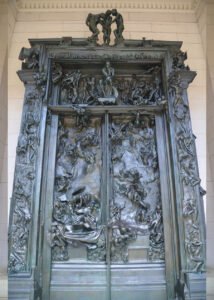
Forbidden doors is already a good clue to Gates of Hell, which Paolo and Francesca faced for their sin. This song-title is already perfectly linked to the young man in Sadeness clip who opened the door. And one small detail in that video was also the brown whirlwind appearing behind the pilgrim. The thing is that “Dante” in the video-clip is not put in the place of Paolo nor of the actual Dante, but is rather forced to do the same journey Dante did in his poem.
We have to ask ourselves why there’s so much attention to detail that is even coupled with a few alienations. Let’s put it this way, in the Divine Comedy, Dante is all the time accompanied by Virgil, who was sent by Beatrice to look over for Dante. Until Dante moves from one circle of hell to another, he reaches the Mountain Purgatory, he sees the light that shines (Beatrice) and faints. Contrary to this album, which is clearly a depiction of Divine Comedy, there are evident and deliberate alienations from the original.
Because, the young man has to face the journey alone. So is it a personal journey to enlightenment? And we should ask the right questions, due to the complications of these elements that are difficult to be understood: is it Michael’s journey ? Someone else’s that Michael knows better than anyone? Or both?
The Voice and The Snake
While the lyrics of the song seem like an alienation and an interpretation of a Bible verse from The Revelation, things are much deeper than that. But remember that seven seals, seven sins, seven bowls etc. also signify a cycle where humanity falls in each of these three events, and then God has to intervene. This is very similar to the man’s journey. They do so many mistakes, but in the end they have to free themselves of all the negativity and reach that purification.
Yet, we should still pay attention to the word ‘seal’, because Dante also took a lot of inspiration from the Bible as well. In practical terms, the noun in itself has something with the stamp on someone’s letter or envelope. But in this case, Dante, who had a long journey in purifying himself, in each circle he left, a P on his head disappeared.
‘P’ in Latin means peccatum. So on Dante’s head there were seven seals. The seventh seal or sin was, indeed, lust. The one who carved Dante’s Ps on his head was the guardian angel with the sword. If I’m not mistaken, in one of the video-clips of Enigma, it does show someone with a sword who hammers it into the ground. That’s the seal of the sins. The foundation has been built.
Rivers of Belief
This song, which is the last one of the album, is a breath of fresh air compared to the other songs, because it is hopeful. It seems as if the narrator looks in the distant future and hopes for something better. This was also the first video-clip of Enigma where Michael himself appears there, and there’s too much hints of water. The water of purification, of course.
What is even more interesting, is that even here we have hints of Dante’s masterpiece. Because Dante in the poem went to purify himself in the RIVERS before going to heaven. The first river was Lethe, where he purified himself to wash away the memories of the sins or habits, because he couldn’t get to heaven if he had regrets and only bad memories. Or in short, to be haunted by the past. To be haunted from his mistakes.
Then he went to the second river, Eunoe, which is Dante’s own invented river, where he purifies himself in this river of good memories, because these are the memories which will give him strength to move forward instead of being haunted by the past.
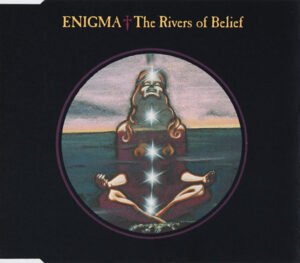
“When the lamb opened the seventh seal, silence covered the sky”
We established that the seventh seal is related to ‘P’, the seal on Dante’s head in every circle of hell he left. The last seal had exactly something to do with the ‘lust’ sin. Which is also the topic that’s mainly covered in the album. After the last P or the last seal was removed from Dante’s head, the journey became even easier until he reached Mountain Purgatory.
This song answers the previous questions: It is indeed someone’s journey to enlightenment. But whose? If there’s a mention of a friend, does the narrator speak to someone dear to him? Is he addressing himself? Or both? To whom he will return?
These seem more like an advice than scolding from the previous songs. An advice to look inside yourself and find the voice of reason. The voice of reason will bring you to understand the weight of your mistakes. Just like Virgil helped Dante on his journey.
But if we pay attention, the last P in Dante’s head before he could ascend to the mountain was lust. So it becomes even trickier if we take this literally. Who sinned? Whose sin is it? And was it a definition the mind gave when trying to assess a delicate situation?
We will see in the next albums.
The cover of the single also seems to be a woman meditating above water and on her body the 7 chakras are attached. These 7 chakras in Hindu culture are fundamental to keeping your body and your soul alive. To ensure your state of well-being. It seems like, they’re needed to survive something…
Conclusion
After analyzing the entire album, you could now almost cross the stage of explaining these things very literally now. With all that in mind it looks like this is a journey of someone who thinks he’s lost control over himself and has to make it known that he won’t follow this destructive path. He stands firm on his belief that this is not the right way. But this is also guaranteed and hinted that he had also succumbed into this destruction and will do anything to purify himself. Even at his own or someone else’s detriment.
There’s absolutely no trace of de Sade here or Hindu rivers…
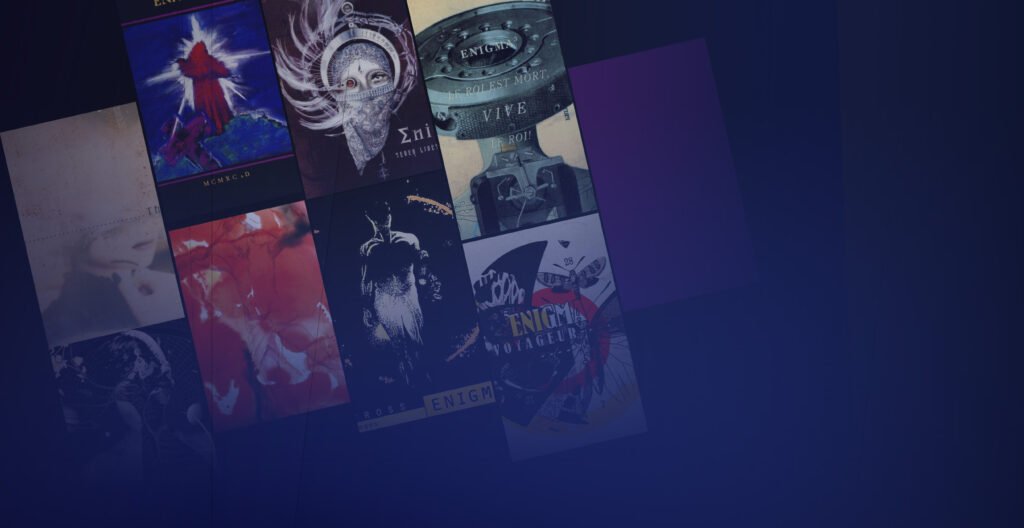
Let’s also mention that the cover of the album ‘MCMXC a.D’ also symbolizes Dante the Pilgrim after reaching the Mountain Purgatory, and the light symbolizes the heaven where Beatrice descends from to take Dante and bring him to paradise.
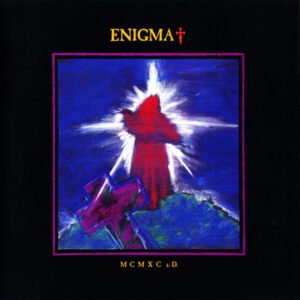
Beatrice was Dante’s childhood love and it remained so until she died in her early 20s. Here you have to take Beatrice as the symbol of divine love who’ll bring you closer to God and to see how real paradise looks like. In this particular poem, Virgil makes it clear to Dante that love is the seed of all good and bad deeds in the world. Nobody has done anything without loving something or someone. And everyone has loved in the wrong way. But you will have to learn how to love God, yourself and humanity, before loving in the right way.
The paradise or the heaven is related to the Garden of Eden before the fall of man. The very beginning of humanity that symbolizes the pure innocence. With Dante’s purification in the rivers it’s hinted clearly that this is the state of full innocence and exempt of any sin. Because people who go in paradise are innocent, fully purified.
If one has done something that has caused the destruction of the self, that wouldn’t be the beginning of the end, it would be the return to himself, the return to innocence…
But to do that, one has to make a hard decision, that will CHANGE the lives forever.
One Comment